Meaning of  Inflation and its Types

Meaning of Inflation and its Types

Introduction

Inflation is a key concept in modern economics that impacts every aspect of the economy. It refers to a situation where prices of goods and services increase, leading to a decline in the purchasing power of money. This happens when there’s more money circulating in the economy than the available goods and services, causing prices to rise. Inflation can affect various sections of society differently and has far-reaching consequences for economic stability and growth.

Meaning of Inflation

Inflation is the continuous rise in the general price level of goods and services over time, leading to a decline in the value of money. Simply put, inflation occurs when “too much money chases too few goods.”

Here are some key definitions of inflation:

Coulburn:

“Inflation is a situation of too much money chasing too few goods.”

Milton Friedman:

“Inflation is always and everywhere a monetary phenomenon… caused by a rapid increase in the quantity of money compared to output.”

Harry W. Johnson:

“Inflation is a sustained rise in prices.”

Shapiro:

“Inflation is a persistent and appreciable rise in the general level of prices.”

From these definitions, it’s clear that inflation results from an imbalance between money supply and the availability of goods, or when goods are scarce relative to money.

Types of Inflation
1. Demand-Pull Inflation

* This occurs when demand for goods and services exceeds supply.

* It is common in growing economies where higher income levels increase spending, creating more demand.

2. Cost-Push Inflation

* Happens when production costs (like wages or raw materials) rise, causing businesses to increase prices to maintain profit margins.

* For instance, a surge in oil prices often leads to higher transportation and production costs, contributing to inflation.

3. Built-In Inflation

* Also known as wage-price inflation, this happens when workers demand higher wages due to rising living costs, and businesses raise prices to compensate for higher labor costs.

4. Hyperinflation

* An extreme form of inflation where prices rise uncontrollably in a short period.

* Examples include historical cases like Germany in the 1920s or Zimbabwe in the 2000s.

5. Stagflation

A rare situation where inflation occurs alongside stagnant economic growth and high unemployment.

It challenges traditional economic theories as both inflation and recession occur simultaneously.

6. Deflationary Gap Inflation

As explained by Keynes, this happens when there is underutilized capacity in the economy, and money supply increases. Initially, production and employment rise along with prices. However, once resources are fully utilized, further money supply leads to inflation without an increase in output.

Keynesian Perspective on Inflation

Keynes differentiated between two stages of inflation:

1. Semi-Inflation (Bottleneck Inflation):

Occurs when there are underutilized resources. Increased money supply boosts production, employment, and demand, but eventually leads to price increases due to bottlenecks in production.

2. True Inflation:

After full employment is achieved, any further increase in money supply leads to rising prices without a corresponding increase in output.

Conclusion

Inflation is a complex phenomenon influenced by multiple factors, including demand, supply, and monetary policy. While mild inflation can stimulate economic growth by encouraging spending and investment, uncontrolled inflation can harm economic stability. Understanding the types and causes of inflation is crucial for developing effective policies to maintain a balanced and stable economy.
Keynesian Theory of Income, Output, and Employment

Keynesian Theory of Income, Output, and Employment

Introduction

John Maynard Keynes (1883–1946), a renowned English economist, revolutionised economic thought by challenging the ideas of classical economists. His groundbreaking work, “The General Theory of Employment, Interest, and Money” (1936), introduced innovative concepts that addressed the critical issues of his time, especially the Great Depression of the 1930s. Keynes advocated for a shift from the traditional reliance on free markets to a more government-influenced economic system, laying the foundation for modern macroeconomics. This significant shift in thinking is often referred to as the “Keynesian Revolution.”

Keynesian Theory Overview

Keynes developed his theory as a direct response to the classical theory of employment, which assumed that markets would naturally achieve full employment. He argued that this was unrealistic and proposed that government intervention was essential to address unemployment and economic instability. The Keynesian theory emphasizes the role of aggregate demand (total demand for goods and services in the economy) in determining income, output, and employment levels.

Main Features of Keynesian Economics
1. Limited Free Enterprise

Keynes rejected the idea of unrestricted free markets, proposing a mixed economy where government intervention plays a significant role in stabilizing the economy.

2. Government’s Role

He emphasized the importance of government intervention in economic activities to stimulate growth and employment. The government should act as a leader in economic development, especially during downturns.

3. Focus on the Short Run

Keynesian economics addresses short-term economic issues, making it highly relevant for tackling immediate problems like recessions and unemployment.

4. Deficit Financing and Monetary Policy

Keynes advocated for deficit financing (spending more than government revenue) and cheap money policies (low-interest rates) to boost demand, employment, and economic development.

5. Investment Drives Growth

According to Keynes, investment is the key determinant of production and employment levels. Increased investment leads to higher output and job creation.

6. Law of Diminishing Returns

Keynes acknowledged that production is subject to diminishing returns, meaning that beyond a certain point, additional inputs yield smaller increases in output.

7. Perfect Competition Assumption

Keynesian theory operates under the assumption of perfect competition in markets, where no single buyer or seller can influence prices.

8. Macroeconomic Focus

Unlike classical economics, which focuses on individual markets, Keynesian analysis considers the economy as a whole, making it a macroeconomic approach.

9. Underemployment Equilibrium

Keynes believed that economies typically operate below full employment, settling at an underemployment equilibrium due to insufficient demand.

10. Fixed Short-Term Factors

In the short run, factors such as population, labour force, labour efficiency, and technology are assumed to remain constant.

Keynesian Perspective on Inflation
1. Demand Deficiency Theory

Keynes argued that unemployment arises from a lack of effective demand. Full employment, he believed, is an unrealistic goal, as economies tend to stabilize at underemployment levels.

2. Employment and National Income

Employment levels are directly linked to national income and output. To increase income and output, idle resources, especially labour, must be utilized effectively.

3. Theory of Employment and Income Determination

Keynesian economics is often referred to as the “theory of employment determination and income determination” because of its emphasis on increasing demand to boost employment and economic growth.

Conclusion

Keynesian theory transformed economic thinking by addressing the limitations of classical economics. It highlights the importance of government intervention and aggregate demand in driving economic stability and growth. This approach remains highly influential, providing a framework for policymakers to tackle unemployment, recession, and economic stagnation.

Saving and Investment Equality

Saving and Investment Equality

Say’s Law of Markets

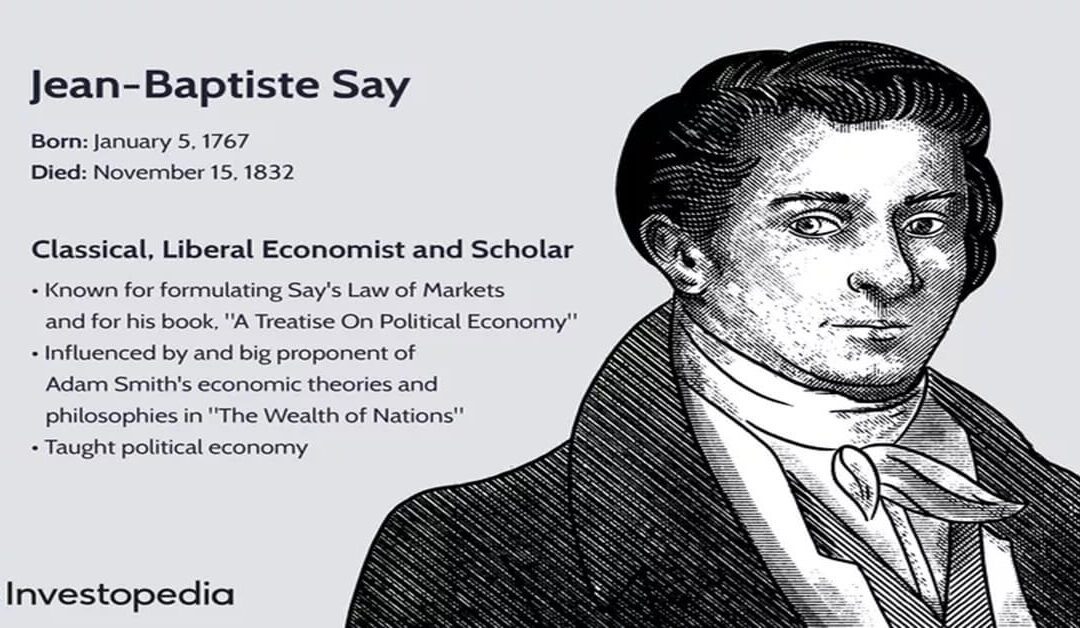
Say’s Law of Markets is a key concept in classical economic theory, introduced by 19th-century French economist J.B. Say. It is based on the idea that “supply creates its own demand.” This means that as goods are produced, they generate income, which in turn creates demand for those goods.

1. Production Creates Demand for Goods

When producers make goods, they pay wages to workers and spend on other inputs. Workers use these wages to buy goods, creating demand in the market. Essentially, production and demand go hand in hand.

2. Based on the Barter System

Originally, Say’s Law applied to a barter economy, where goods were exchanged directly for other goods. In such a system, whatever is produced is ultimately consumed. Even in a money-based economy, the idea remains that production generates income, which fuels demand.

3. No General Overproduction

Say argued that general overproduction (where the economy produces more than it can consume) is unlikely. People only produce goods they intend to exchange for something they need. While a specific product might be overproduced due to incorrect demand estimates, this is a temporary issue that can be corrected.

4. Support from J.S. Mill

Economist J.S. Mill agreed with Say’s Law, emphasizing that general overproduction and unemployment are improbable. Increasing production leads to more jobs, higher incomes, and greater profits.

5. Saving and Investment Balance

Not all income is spent on consumption—some of it is saved. Say believed that these savings are automatically invested, fueling further production. This balance between saving and investment prevents overproduction.

6. Role of Interest Rates

Interest rates help maintain the balance between saving and investment. If investment exceeds saving, interest rates rise, encouraging more saving and less investment. Conversely, if saving exceeds investment, interest rates fall, encouraging more investment and less saving.

7. Labour Market and Employment

Say’s Law also applies to the labour market. Economist Pigou argued that if wages are flexible, more workers can be employed. Free competition ensures that wages adjust to match demand, reducing unemployment. However, laws like minimum wage or demands from trade unions can disrupt this balance.

Say’s Law: Key Propositions and Implications

Say’s Law provides valuable insights into how markets function. Here are the main propositions and their implications:

1. Full Employment in the Economy

The law assumes that the economy operates at full employment. This means all resources are utilized, and increasing production leads to more jobs for workers and other inputs. Production continues to grow until the economy reaches its maximum capacity.

2. Efficient Use of Resources

At full employment, no resources are left idle. This ensures proper utilization, resulting in higher production and more income for everyone involved.

3. Perfect Competition in Markets

The law assumes a perfectly competitive environment in both labour and product markets, supported by the following conditions:

a) Market Size:

The market is large enough to create demand for all goods, with supply and demand driving the market forces.

b) Automatic Adjustments:

Markets naturally self-correct. For instance, in the capital market, interest rates balance savings and investments. Similarly, wage rates ensure equilibrium between labour demand and supply.

c) Neutral Role of Money:

The law operates as if it’s a barter economy, where goods are exchanged for goods. Money simply facilitates transactions without affecting production.

4. Laissez-Faire Policy

Say’s Law assumes a capitalist economy that follows the laissez-faire principle, meaning minimal government interference. This allows markets to self-regulate and achieve full employment equilibrium.

5. Saving as a Social Virtue

The income earned by individuals is spent on goods they help produce. Any portion saved is automatically invested back into the economy, driving further production. Thus, saving is considered a social good that supports economic growth.

Criticisms of Say's Law

Economist J.M. Keynes, in his General Theory, strongly criticized Say’s Law of Markets.

1. Supply Does Not Automatically Create Demand

Say’s Law assumes that producing goods automatically creates demand for them. However, Keynes argued that in modern economies, production often outpaces demand. People do not necessarily consume all the goods produced within the economy, especially when demand lags behind supply.

2. No Automatic Self-Adjustment

Say’s Law claims that markets naturally adjust to maintain full employment in the long run. Keynes disagreed, famously stating, “In the long run, we are all dead.” He argued that unemployment persists unless addressed directly, and increasing investment—not waiting for markets to adjust—is the solution.

3. Money is Not Neutral

Say’s Law downplays the role of money, treating it as a neutral medium of exchange. Keynes, however, emphasized that money influences economic activity. People hold money for various reasons—such as emergencies or future business needs—making money a significant factor in economic decisions.

4. Overproduction is Possible

Say’s Law claims there cannot be general overproduction because supply creates demand. Keynes countered that not all income is spent on goods—some is saved, and savings are not always invested. This mismatch can lead to overproduction and unemployment.

5. Underemployment is Common

Keynes argued that full employment is rare in capitalist economies. Supply often exceeds demand, leaving many workers unemployed even if they are willing to work at lower wages. This underemployment undermines the assumptions of Say’s Law.

6. Need for State Intervention

Say’s Law relies on a laissez-faire approach, assuming markets can self-correct. Keynes highlighted how this approach failed during the Great Depression, causing widespread unemployment and overproduction. He advocated for active government intervention through fiscal and monetary policies to balance supply and demand.

7. Income, Not Interest Rates, Balances Saving and Investment

Classical economists claimed that interest rates balance savings and investment. Keynes disagreed, arguing that changes in income, not interest rates, ensure this balance.

8. Wage Cuts Don’t Solve Unemployment

Say’s Law proponents like Pigou believed cutting wages could reduce unemployment. Keynes opposed this idea, stating that wage cuts actually worsen unemployment by reducing workers’ purchasing power. Instead, he supported flexible monetary policies to boost employment.

9. Demand Creates Supply, Not the Other Way Around

Keynes rejected Say’s assertion that “supply creates its own demand.” He proposed the opposite: “Demand creates its own supply.” According to Keynes, unemployment stems from insufficient effective demand—when people do not spend enough of their income on goods, demand weakens, leading to job losses.

Summary

Say’s Law suggests that a free-market economy naturally balances production, demand, and employment over time. While short-term imbalances can occur, the system tends to correct itself, ensuring full employment and efficient use of resources.

Say’s Law emphasizes full employment, efficient resource use, market competition, and the importance of savings in fostering economic progress. By trusting in the market’s ability to self-adjust, it highlights the natural balance between supply and demand.

Keynes’s critique of Say’s Law reshaped economic thought, emphasizing the importance of demand, government intervention, and active policies to address unemployment and economic imbalances. His ideas remain foundational in modern macroeconomics.

Meaning, Types and Scope Macroeconomics

Meaning, Types and Scope Macroeconomics

What is Macro Economics?

Macroeconomics is a branch of economics that examines the performance, structure, and behavior of an entire economy. It focuses on broad factors such as inflation, economic growth, unemployment, national income, and the overall performance of markets, industries, and governments.

Unlike microeconomics, which studies individual behaviors like how households or businesses make decisions, macroeconomics takes a “big picture” approach to understand how economies operate on a national and global scale.

Types of Macroeconomics

Macroeconomics is broadly divided into two main categories:

1.Descriptive Macroeconomics

* Focuses on analyzing real-world data and statistics to describe the current state of an economy.

* Examples include studying the GDP of a country or measuring inflation rates.

2.Theoretical Macroeconomics

* Explores the principles and theories that explain how economies work.

* Key frameworks include models like Keynesian economics and Classical economics that predict and explain economic behaviors.

Scope of Macroeconomics

Macroeconomics covers several important aspects of the economy, including:

1. Economic Output and Growth

* Studies the Gross Domestic Product (GDP) to measure the total value of goods and services produced in an economy.

* Analyzes factors driving economic growth, such as investments, innovation, and resource allocation.

2. Inflation and Deflation

* Examines changes in the general price level of goods and services.

* Inflation indicates rising prices, while deflation reflects falling prices. Both have significant impacts on purchasing power and economic stability.

3. Unemployment

* Looks at the causes and effects of unemployment in an economy.

* Focuses on reducing unemployment rates through effective policies and job creation.

4. National Income

* Measures the total income earned by a nation’s residents.

* Includes components like wages, profits, and investments.

5. Monetary and Fiscal Policies

* Studies how government policies, like adjusting tax rates or altering interest rates, influence the economy.

* Aims to maintain a balance between growth, inflation, and employment.

6. International Trade and Globalization

* Examines the flow of goods, services, and capital across borders.

* Focuses on exchange rates, trade deficits, and the impact of globalization on national economies.

Why is Macroeconomics Important?

Macroeconomics plays a vital role in understanding the functioning of an economy and helps policymakers, businesses, and individuals make informed decisions. It addresses questions like:

* What drives economic growth?

* How can we reduce unemployment?

* What causes inflation, and how can it be controlled?

By studying macroeconomics, students can develop a deeper understanding of global economic challenges and contribute to shaping effective solutions.

In Conclusion

Macroeconomics is a fascinating and essential field of study that explores the complex interactions of economic variables at a large scale. From managing inflation to fostering economic growth, the scope of macroeconomics extends across all aspects of modern society, making it an invaluable tool for analyzing and improving the world we live in.

Determinants of Social Mobility: Occupation and Income

Determinants of Social Mobility: Occupation and Income

Social mobility refers to the movement of individuals or groups within a social hierarchy, often involving shifts in socio-economic status. Two key determinants of social mobility are occupation and income, as these factors play a pivotal role in shaping an individual’s position within society. In the Indian context, where traditional systems like caste intertwine with modern socio-economic dynamics, these determinants hold particular significance.

1. Occupation as a Determinant of Social Mobility

Occupation refers to the type of work or profession an individual engages in. It is a vital determinant of social mobility as it directly influences income, social status, and lifestyle.

a. Traditional Occupations and Caste System

* In traditional Indian society, occupations were largely hereditary and determined by the caste system. For example, Brahmins were scholars and priests, Kshatriyas were warriors, Vaishyas were traders, and Shudras were laborers.

* This rigid occupational hierarchy restricted mobility, as individuals were confined to the professions of their caste, with minimal opportunities for change.

b. Modernization and Occupational Mobility

* The advent of industrialization, globalization, and urbanization has weakened the link between caste and occupation.

* Educationhas become a key enabler, allowing individuals from lower socio-economic backgrounds to pursue professions traditionally unavailable to them. For example, members of marginalized communities have entered fields like medicine, engineering, and public administration.

* Reservation policiesin education and employment have further facilitated occupational mobility for Scheduled Castes (SCs), Scheduled Tribes (STs), and Other Backward Classes (OBCs).

c. Influence of Technology and Urbanization

* The rise of the information technology (IT) sector and service industries has created a surge in white-collar jobs, offering new pathways for upward mobility.

* Migration from rural areas to urban centers for employment opportunities has also contributed significantly to occupational mobility.

2. Income as a Determinant of Social Mobility

Income is another critical factor that influences an individual’s ability to move up the social ladder. It determines access to resources, education, healthcare, and a better standard of living.

a. Income Inequality and Social Mobility

* Income inequality persists in India, with significant gaps between the rich and the poor. This disparity impacts the potential for social mobility, as those with higher incomes can invest more in education and other avenues for advancement.

* For lower-income groups, breaking out of the cycle of poverty often requires systemic support, such as government welfare programs and skill development initiatives.

b. Role of Education in Enhancing Income

* Education has a direct correlation with income levels. Higher education and professional degrees lead to better-paying jobs, enabling upward mobility.

* For instance, individuals from rural or economically disadvantaged backgrounds who secure professional degrees often achieve significant improvements in their income and social status.

c. Dual Income and Women’s Mobility

* The rise of dual-income households, where both men and women contribute financially, has enhanced social mobility, particularly in urban areas.

* Increased participation of women in the workforce, supported by policies like maternity benefits and workplace equality, has bolstered their role in improving household income and societal status.

Challenges to Mobility through Occupation and Income
1. Persistence of Caste and Discrimination:

Despite modernization, caste-based discrimination continues to limit access to certain occupations for marginalized groups.

2. Gender Inequality:

Women in India face barriers to occupational mobility due to societal norms, wage gaps, and limited access to higher-paying jobs.

3. Informal Economy:

A large segment of India’s workforce is engaged in the informal sector, where income is low, unstable, and unregulated, restricting opportunities for mobility.

4. Regional Disparities:

Urban areas offer more opportunities for mobility compared to rural regions, creating a divide between urban and rural populations.

Examples of Social Mobility Through Occupation and Income
1. IT Professionals:

Many individuals from middle-class or rural backgrounds have achieved significant upward mobility through careers in the IT sector, often earning salaries that elevate their socio-economic status.

2. Government Jobs:

Securing a government job, often through competitive exams, has been a traditional route for upward mobility in India, especially for lower-income and marginalized groups.

3. Entrepreneurship:

The rise of start-ups and access to funding have allowed individuals to transcend their traditional socio-economic status through successful ventures.

Conclusion

Occupation and income are interrelated and powerful determinants of social mobility in India. While modernization, education, and government policies have opened new avenues for upward mobility, challenges like caste-based discrimination, gender inequality, and income disparity still persist. To enhance social mobility, efforts must focus on reducing inequalities, expanding access to education, and creating equitable opportunities in the job market. Only then can India achieve a more inclusive and dynamic society where individuals can realize their full potential.