
Introduction:
The Arabs were the first Muslims to invade India. They confined themselves to the Sindh region and ignored the rest of India. But later, the Turks, who undertook expeditions to India, conquered the some parts of the country and permanently established Islam there. The Turks were physically stronger than the Arabs and had powerful weapons. The Turks were also spiritual beings. They were religious. After gaining control of the Caliphate of Baghdad in the 8th and 9th centuries, the Turks installed their vassal, the Samasid dynasty, in Central Asia after the death of the Abbasid Caliph. Abdul Malik was the king of the Samasid dynasty. After his death, his slave Alpatagin established an independent kingdom and contributed to the political development of Central Asia. He died within a few months of establishing the kingdom. 14 years after his death, Sabaktagin ascended the throne of Ghazni in 977 AD. Alaptagin and Sabaktagin had already invaded India several times and plundered vast amounts of wealth from the Hindu rulers. Sabaktagin died in 997 AD. Then his favourite servant, Muhammad of Ghazni, ascended the throne. He had heard of India’s wealth and had undertaken about 17 expeditions to India. He plundered a considerable amount of Indian wealth. After his death, his close servant, Muhammad of Ghori, invaded India several times and captured vast amounts of wealth, thereby establishing Islam in India forever.
Due to Ghori Muhammad’s efforts, Islam came to India and competed with Hinduism. This led to changes in politics, religion, society, and culture. Past foreign groups, such as the Kushans, Greeks, Persians, and Sakas, had little impact on India. Jains and Buddhists were born in India and did not significantly change society. They lived peacefully with the Hindus. However, Islam kept its own identity and did not merge with Indian culture. The Turkish invasions caused changes in these areas of India.
1) Political Changes:
The Turkic invasions had several major political consequences in India, as outlined below.
- Base to launch further attacks:
The Turkic invasions culminated in the Battle of Tarain between Ghori Muhammad and Prithviraj Chauhan. This battle marked the expansion of the Sultanate’s rule across North India. Importantly, Muhammad of Ghazni’s earlier conquest of Punjab provided Muhammad Ghori with a strategic base to launch further attacks.
- Birth of Delhi Sultanate:
After Ghori Muhammad’s return, he left Qutub-ud-din-Aibak to manage the conquered areas. Thus Qutub-ud-din-Aibak established himself as the ruler of the Delhi Sultanate. Therefore, Ghori Muhammad’s campaigns directly initiated Sultanate rule in Delhi.
- Religious aspects of foreign Muslims in Indian politics:
The Turks ran their administration independently. They respected and listened to the Caliph of Baghdad. They believed their rule in Delhi was part of the wider Muslim community. So, they accepted the Caliph’s authority. This made Muslim religious identity a key factor in Indian politics.
- Rise of Turkic Control in Governance:
Due to the lack of political unity among Indian rulers, the Turks defeated them and established their authority. Indians lost their influence in governance, with high administrative positions reserved for the Turks. Consequently, Hindus and other Muslims had limited access to top posts.
- Hindus in the administration:
The Turks appointed Hindus to various posts in India, from village administration to the central government, and administered India under their guidance. For example, Medini Rai of Chanderi, Roop and Sankan in Bengal, etc. Similarly, the Sultan of Golconda and Yusuf Adil Shah of Bijapur also appointed Hindus in the administration.
- Hindus were subjected to physical and mental torture:
The Turks attacked India and forcibly took away the power from the Hindus and made them their slaves. The highest posts of the state were given to the Turks and the lower posts were given to the Hindus. As a result, the Turks were able to enjoy the natural wealth of India and various facilities without any difficulty. The Hindus were led to a life worse than cattle. The fanatics like Muhammad Ghazni, Muhammad Ghori and Alauddin Khilji and Ibrahim Ludi did not tolerate the progress of the Hindus at all. They tortured the Hindus at every step and treated them like animals. Thus, the Hindus were subjected to physical and mental torture by the Turks.
- Persian Administrative Language:
After the Turks invaded, Persian replaced Sanskrit as the language of government in India. This lasted until the Mughal period. The Turks welcomed many Hindu scholars, writers, and poets to their courts. These scholars translated many Hindu texts into Persian.
- Change of capital:
As a result of the Turks’ influence on India, they changed the previous central location of Lahore and shifted it to Delhi. Thus, from the time of Ghazni and Ghori Muhammad to the last days of the Mughal Empire, Delhi became the centre of Muslim life. Muslim political activities began in Delhi itself.
- Absence of law of succession:
Muslim politics at that time were confusing. There were no clear rules about succession. It was not automatic for sons to inherit the throne. The strongest person would take power. Because of this, the Sultan’s sons often fought each other. These fights led to bloodshed.
- Decline of feudal system:
After the Turkish invasion, the traditional feudal system of India began to weaken significantly. The Turks reorganized the empire by dividing it into various provinces, which reduced the power and influence of the small local rulers who had previously controlled their own territories. These petty rulers gradually lost their authority, wealth, and identity. The new administrative divisions directly brought these regions under the control of the Sultan, marking the beginning of the decline of the old feudal order.
To manage these provinces effectively, the Turks introduced the Iqta system, appointing officials known as Iqtadars. An Iqtadar was responsible for collecting taxes from the Iqta and using a portion of the revenue to maintain an army. The remaining income had to be submitted to the Sultan. This arrangement not only ensured proper administration but also strengthened the central government, as it now had a direct hold over the provinces through appointed officers instead of relying on feudal lords.
A major military transformation also contributed to the decline of the feudal system. In ancient India, kings often depended on feudal armies provided by local chieftains during times of war. However, with the arrival of the Turks, a permanent standing army was introduced—well-trained, disciplined, and always ready for battle. This reduced the relevance of feudal troops, making the Sultan independent of local rulers for military support. As a result, the feudal army gradually disappeared, and the feudal system weakened and eventually declined under the strong centralized rule of the Turkish administration.
- Inclusion of all people in the army:
During the ancient and medieval rule, only those from the Kshatriya background could join the army among the Rajputs. There was a rule that only Kshatriyas could join the fight to defend the country. No matter how strong they were from other castes and races, they were not included in the army. It was concluded that if the Kshatriyas lost in the war, the entire country would be lost. But after the Turks arrived in India, they issued a Patta stating that any caste (including the Kshatriyas) could join the army. Thus, soldiers from different castes and races got an opportunity to join the Indian army.
2) Economic Changes:
The changes in India’s economy due to the Turkic expeditions are as follows.
- The Great Plunder:
Muhammad of Ghazni attacked India many times to take its riches. He was obsessed with wealth. He led 17 campaigns and took away much of India’s wealth. Muhammad of Ghori attacked India to take wealth and expand his kingdom. He defeated Prithviraj Chauhan in the Battle of Tarain. These attacks made India poorer. According to Ferista, the looted gold, silver, and jewels were worth large amounts, including 7 lakh gold dinars, and hundreds of manas of gold, silver, and jewellery.
- Economic crisis:
After the Turks invaded India, they interfered in Indian politics. Then they imposed Jaziya taxes on the Hindus. Many Hindus who could not pay taxes converted to Islam. The country’s wealth was concentrated in a few individuals. They did not use this wealth for the welfare of the citizens. Instead, they used it to live in luxury. Thus, the Indians were in financial distress.
- Changes in Tax System:
Since the Turks were Muslims, they collected taxes in accordance with Islamic law.
- Zakat: Every Muslim had to pay 2% of their income to the government.
- Khams: Tax to be paid to the government on the spoils of war.
- Jajiya: Tax to be paid by Hindus to the government for their protection.
- Khiraj: Tax to be paid by farmers to the government on the produce of their land, which was 50%.
3) Social Changes:
Islamic culture and civilisations had some bad effects on Indian society and led to changes in Indian society. They can be seen as follows.
- It led to the division of Indian society:
The Turks invaded India and settled here. As a result, Indian society was divided into two parts, Hindu society and Muslim society. There were differences between the two, such as high and low, black and white, and caste. This led to excessive fighting and fighting between them, and harmony gradually deteriorated.
- Impact of Islam’s Growth on Hindu Caste Practices:
There is no caste system in Islam. As a result, the Sultans did not accord recognition to the caste system or the varnashrama religion in Hinduism. Thus, the caste system lost its complexity.
As a result of the arrival of the Turks, Islam gained ground day by day. Fearing this, the Hindus strictly implemented the caste system to protect Hinduism. Instead of eradicating the caste system in India, it showed its darkest form. Thus, the caste system lost its complexity and its darkness was displayed simultaneously.
- Change in urban areas:
During the rule of the Turks, it became convenient for people of all types to live in urban areas. A system of living together without the constraints of caste and religion was created. Because the Muslim leaders or Sultans did not need to declare caste and maintain the caste system. They had no interest in it.
- Lifestyle Transformation After Turkish Conquest:
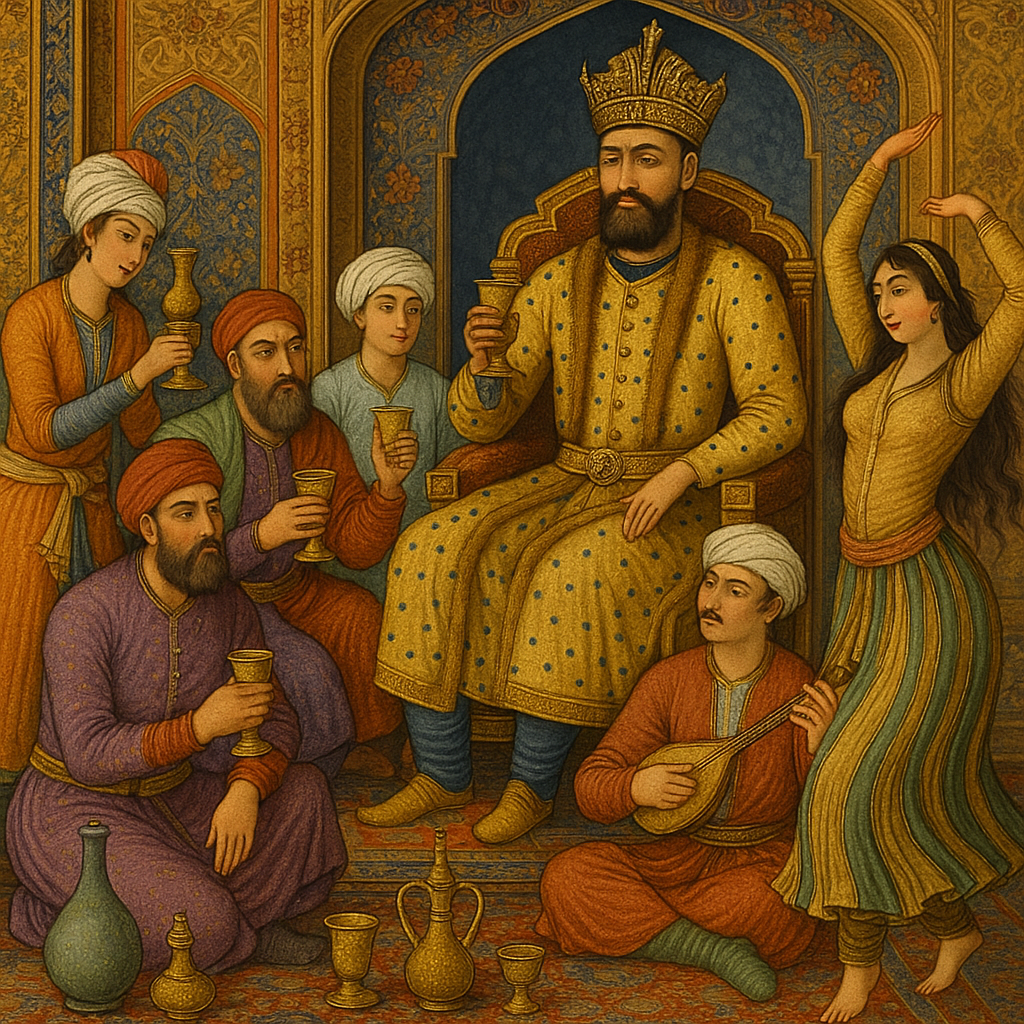
After the Turks established their rule in India, the immense wealth of the subcontinent began to influence their way of life. The riches they acquired allowed them to adopt a luxurious lifestyle similar to that of the Persians. Palaces, fine garments, perfumes, rich food, and refined entertainment became a part of the elite culture. This new taste for comfort and grandeur gradually spread across society, influencing the lifestyle patterns of many people in the major cities.
Over time, this exposure to luxury also led to certain social changes that were not always positive. Historical accounts mention that drinking, gambling, and immoral activities became more widespread, affecting both the ruling class and sections of Hindu society. As people were drawn to comfort and indulgence, traditional moral values began to weaken. Thus, the Turkish conquest not only introduced new cultural elements but also contributed to the rise of social vices, marking a significant shift in medieval Indian society.
- Dress and Lifestyle Influence:
The arrival of the Turks and other Muslim communities in India introduced new and attractive styles of dress, food habits, perfumes, and lifestyle practices. Muslim nobles and soldiers wore elegant garments such as silk robes, muslin outfits, embroidered turbans, and decorative belts, which made their appearance striking and sophisticated. Their refined eating habits, use of perfumes, and well-organized living styles created a strong visual and cultural impact on the local population.
Hindus, who traditionally followed simpler clothing and lifestyle practices, were naturally fascinated by these new influences. Over time, many Hindus—especially those living in towns, trade centers, and royal courts—began adopting elements of Muslim dress, food, and etiquette. This gradual imitation reflected the cultural blending taking place in medieval India, where Muslim styles became popular and influenced everyday life among many Hindus.
- The position of the traditional rulers (Feudal lords) was taken over:
The Iktas are the provinces. The Iqtadars who led it acted as representatives of the government. They collected taxes. Thus, the Feudal leaders who had done the same job earlier lost their positions. They were removed from the privileges of the government.
- Introduction of the Purdah system:
Before the Turks came to India, the Purdah system was not in force in India. This system was reserved only for the Muslim community. As the situation changed, Hindus also started following the Purdah system. The reason was that they followed this system with the intention that beautiful Hindu girls should not fall into the eyes of few lustful Muslim men. Thus, the Purda system took root in Indian society.
- Child Marriage became popular:
Muslim kings, nobles and soldiers started forcibly marrying Hindu women. Some would kidnap and marry Hindu girls. Due to this, Hindus would marry their daughters off before they reached puberty. Child marriage, which was practised on a small scale earlier, became more prevalent after the Turks came to India. To protect their daughters from Muslims, Hindus resorted to the inhuman act of killing a girl child as soon as she was born. Due to this, female infanticide became common.
- Restriction on women’s freedom:
Women did not have freedom in Turkish society. Women were denied the right to stand equal to men. They were restricted from participating in meetings, ceremonies and religious functions. This influenced Hindus. They also restricted women’s freedom. Women were forced to spend their time within four walls.
- Sati and Johar system became popular:
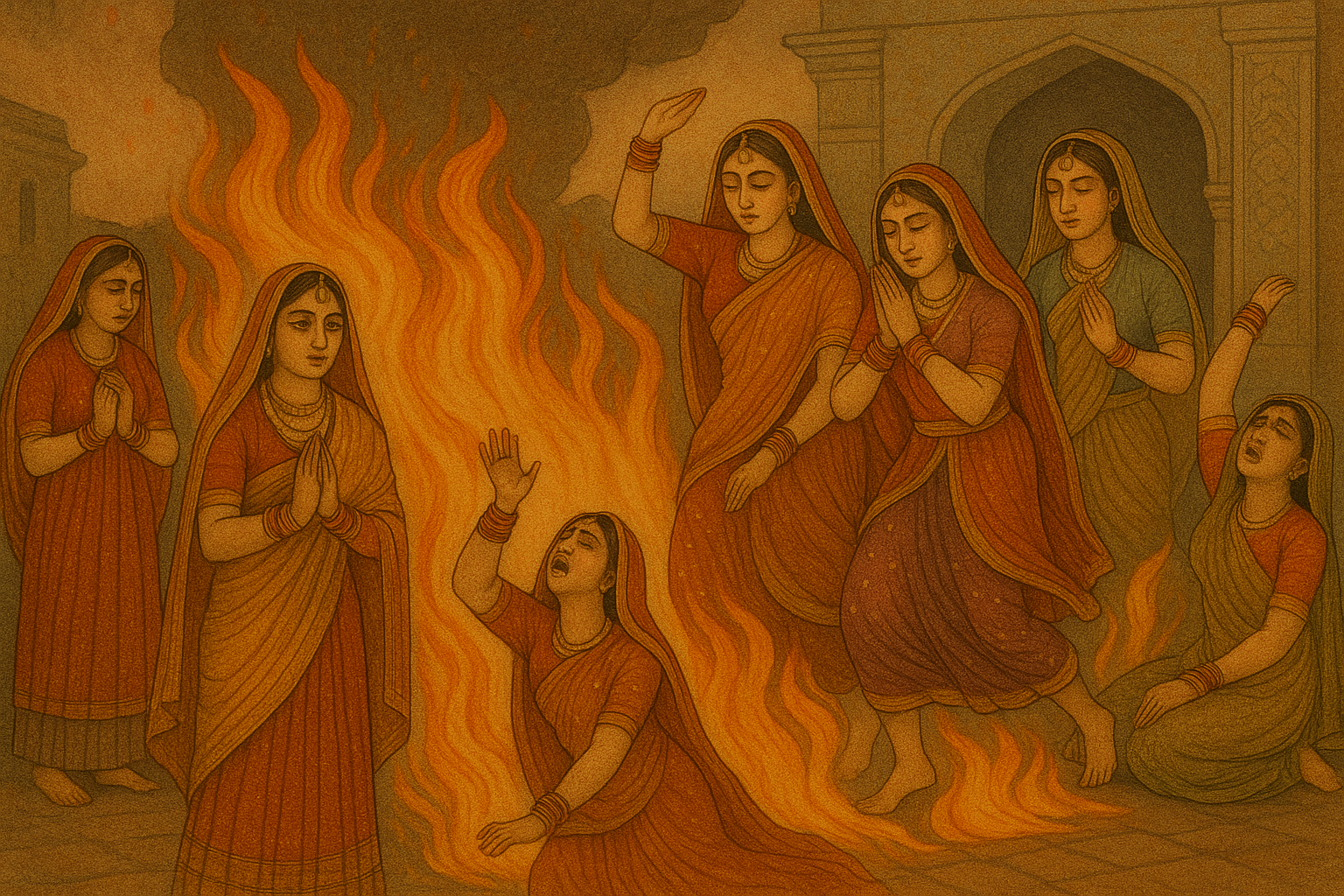
During the period of Turkish invasions, many regions of India experienced instability, warfare, and fear. Historical accounts mention that during some of these invasions, large numbers of women were kidnapped, forcibly married, sold, or enslaved. In response to these threats and to protect their honour and chastity, Hindu women in several regions especially Rajasthan began practicing Johar, a ritual in which women collectively sacrificed themselves by entering a fire when defeat in battle seemed inevitable. This was seen as a desperate act of protection during times of extreme danger.
Alongside Johar, the practice of Sati also gained wider acceptance in certain parts of India during this turbulent period. Sati involved a widow immolating herself on her husband’s funeral pyre, and over time it came to be regarded as a symbol of ultimate loyalty and purity. The continuous invasions and fear of dishonour contributed to the spread and social acceptance of both Johar and Sati among some Hindu communities, marking a tragic and complex chapter in India’s social history.
- Birth of Slavery:
The establishment of Muslim rule in India introduced a large-scale system of slavery, which became a marker of prestige, wealth, and power among the rulers. Many Muslim kings and nobles believed that owning a large number of slaves enhanced their social standing. Captives taken during wars—including soldiers, nobles, and members of royal families—were often forced into slavery and made to serve in various capacities. These enslaved individuals were employed in households, military camps, palaces, and administrative works, reflecting the rulers’ dominance over conquered territories.
Over time, slavery expanded to an extraordinary scale under certain rulers. Alauddin Khilji is recorded to have kept around 84,000 slaves, while Firoz Shah Tughlaq maintained an even larger number—nearly 1,80,000 slaves. These slaves performed a wide range of duties, from domestic service to skilled labour, and even administrative tasks. The massive number of enslaved people reflected the political authority of the rulers but also highlighted the harsh realities faced by those who were forcibly taken from their families and compelled to serve throughout their lives.
4) Religious Changes:
After the arrival of the Turks in India, there were many changes in the Indian religious sphere. They are as follows.
- Propagation of Islam:
After the Muslims settled in India, Islam became more and more powerful. Their conversion work gained momentum because many Muslim kings offered many temptations to the Hindus and converted them to Islam. They destroyed Hindu temples. Some of them even earned the title of idolaters. They imposed inhuman taxes on the Hindus. Those who were unable to pay the taxes accepted Islam. Islam’s monotheism attracted many Hindus. Islam became the “State Religion”. Those who had experienced all kinds of inhuman inequality in Hinduism for thousands of years were attracted to Islam and converted, due to which the evil practices in Indian society started to disappear. As a result, the status of Brahmins declined.
- Religious tolerance:
Initially, there were many differences between Hindus and Muslims. But over time, they adopted the qualities of harmony. They got rid of fanaticism and adopted a sense of equality. Both were influenced by the teachings of Bhakti saints. Hindus started adopting the religious thoughts and practices of Muslims, and Muslims started adopting the religious thoughts and practices of Hindus. Initially, Hindus and Muslims followed the policy of “Na Roti Na Beti”, but gradually they made adjustments in marriage and food arrangements. Hindus adopted the dress and food habits of Muslims, and Muslims adopted the food habits and costumes of Hindus.
- Growth of Bhakti and Sufi sects:
Initially, there was a huge religious gap between Hindus and Muslims. Bhakti and Sufi sects sought to bridge this gap and instil a sense of brotherhood between them. The saints of the Bhakti and Sufi orders preached the unity of God, equality, and simple religious practices. These had a profound impact on Hindus and Muslims. Their thoughts led to the development of a stable attitude among the people.
- Decline of Buddhism:
Muslims who came to India opposed Buddhism and its non-violent policy. Thus, Muslims captured thousands of Buddhists and slaughtered them like sheep. Hindus also did not accept the non-violent policy and distanced themselves from it.
5) Cultural Changes:
The cultural changes in Indian society due to the arrival of the Turks are as follows.
- Origin of Urdu:
The Muslim invaders spoke Persian and Arabic at that time. Similarly, the Hindus had popularised Sanskrit. Both the Muslims who came to India and the Hindus needed a single language. Thus, Urdu emerged from the fusion of Hindu and Muslim cultures. It became popular as the dialect of the Urdu people. Many Muslim poets wrote poems, songs and works in Hindi, and many Hindu poets wrote in Urdu.
- Development of Hindavi language:
Hindavi language emerged from the Apabhramsha dialects spoken in the Delhi region around the 10th to 13th centuries. During this period, the Delhi Sultanate emerged, and Indo-Aryan dialects began incorporating Persian and Arabic words, leading to the development of Hindavi. Persian rulers and poets such as Amir Khusrau called this developing language Hindavi or Dahlavi. This was the initial stage of development behind modern Hindi and Urdu.
- Rise of Indo- Saracenic Art:
As a result of the fusion of Hindu and Muslim cultures, a new style called Indo-Islamic or Indo-Saracenic emerged. Over time, Hindustani music also developed. Muslims destroyed Hindu temples and built mosques on top of them, giving them the form of Indo-Saracenic art.
- Influence on Muslim festival celebrations:
Muslims were influenced by Hindu religious practices and customs. For example, the rituals of Aqibah and Bismillah were celebrated in the same way as the Hindu Chaula Karma and Upanayana programs. The festival of Shab-e-Barat was celebrated in the same way as Shivaratri. The practices of worshipping saints and visiting their graves among the Hindus were also adopted by the Muslims. Hindu thoughts also took deep root among the Muslims. Only a few Muslims abandoned polygamy and followed the system of monogamy. Muslims also followed the Hindu marriage system among themselves.
- Decline of learning centres:
The famous learning centres of ancient times, like Nalanda, Takshashila, Vikramashila, Dagda, Ujjain, Kashi, etc., were destroyed without a trace due to the attacks of the Turks. The Muslims set fire to the valuable library there.
- A touch of modernity to the city of Ghazni:
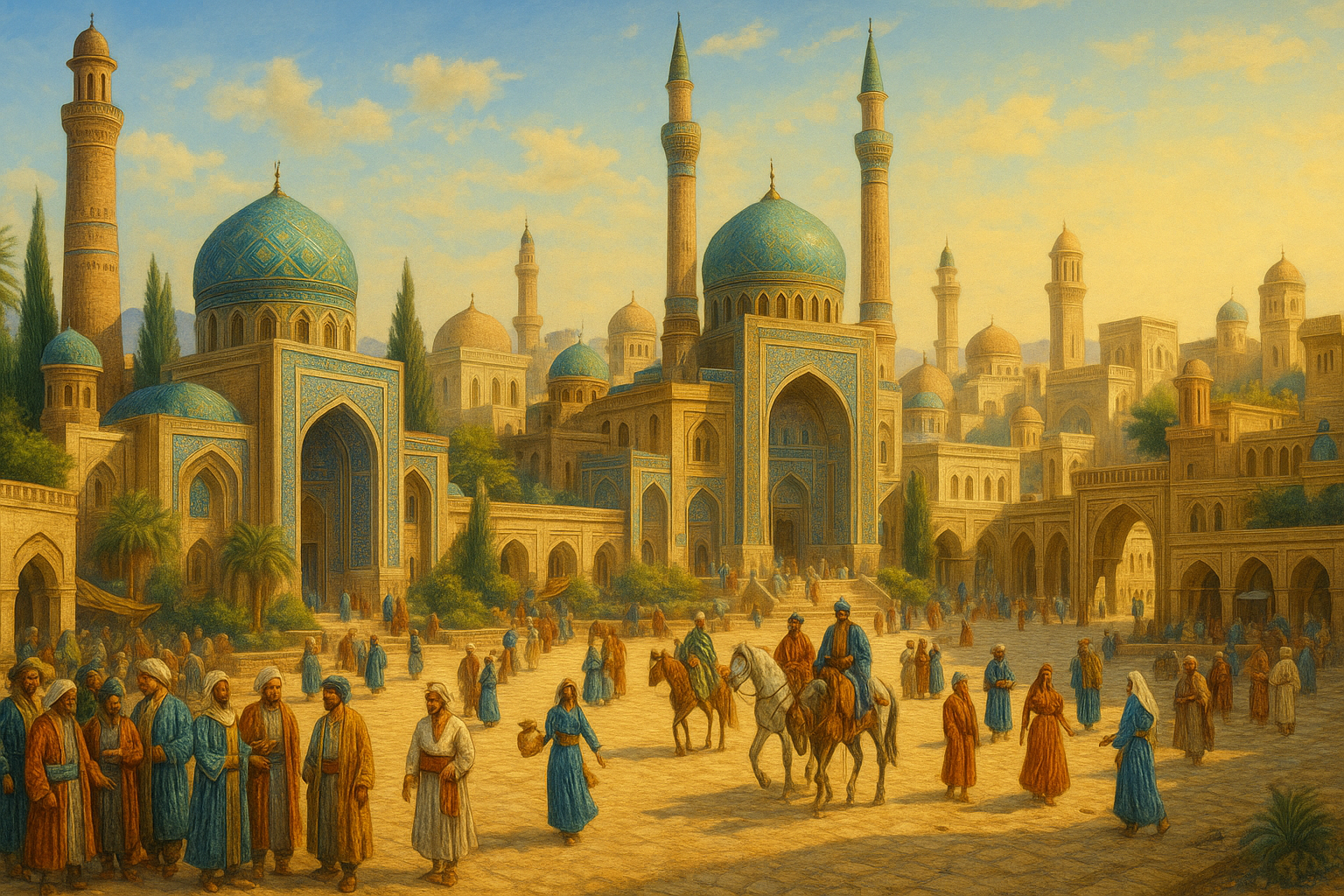
The city of Ghazni underwent remarkable transformation during the rule of Mahmud of Ghazni, largely financed by the immense wealth he looted from India. With this treasure, Ghazni was beautified and developed into a grand, flourishing capital that reflected power, sophistication, and modernity for its time. Magnificent palaces, towering mosques, gardens, marble structures, and artistic monuments were constructed to showcase the glory of the Ghaznavid empire. Skilled architects, artisans, poets, and scholars from different regions were invited, making Ghazni a vibrant centre of culture, learning, and administration. Thus, the riches taken from India played a crucial role in giving the city a new, modern, and majestic identity, turning it into one of the most admired capitals of the medieval Islamic world.
Conclusion:
The interaction between Hindu and Muslim cultures during the Turkish period brought both cooperation and conflict. Complete cultural blending did not occur for several reasons: many Muslim rulers followed policies that encouraged conversion, enforced the principles of the Quran on Hindu society, allowed cow slaughter, and imposed Islamic laws that sometimes led to violence or discrimination. These factors created barriers to full cultural harmony at the higher levels of society.
However, the Turkish invasion also marked the beginning of a new political and cultural era in India. The Delhi Sultanate introduced a strong, centralized administration that reshaped Indian governance. Their arrival encouraged the spread of Islam and opened paths for cultural exchange. This period witnessed remarkable growth in art, architecture, literature, urban development, and military techniques, including the use of cavalry, new weapons, and advanced warfare strategies. Although tensions existed between the communities at the upper levels, ordinary Hindus and Muslims at the grassroots gradually built friendship, trust, and cooperation, laying the foundation for a shared cultural experience. Thus, the Turkish influence left a deep and lasting impact on India’s political structure, cultural life, and social evolution.