Golden Age of Gupta

Golden Age of Gupta

The Gupta period is known as the Golden Age. This is due to the remarkable progress achieved in various fields during the Gupta period.

1. The Gupta kings united a vast territory and ruled a large empire.

2. Great kings like Samudragupta and Chandragupta Vikramaditya II ruled the Gupta dynasty. They eliminated foreign rule and established a stable administration.

3. The Gupta kings established peace in the empire and led to the all-round development of the empire.

4. Economically, the Gupta period was a period of prosperity and prosperity. Trade and commerce were at their peak.

5. There were many other poets, scholars, writers and playwrights like Kalidasa, Basa, Vishnu Sharma, Shudrakas and others who enriched the literary field.

6. The Gupta era was the time when the entire world was in a deep sleep in the field of science. It is a matter of pride that great scientists like Aryabhata, Varahamihira, Brahmagupta, who were the light of knowledge for the entire world, were in the Gupta era.

7. Religiously, although Jainism and Buddhism went on the path of decline, only Hinduism was revived, and the Hinduism of the flower reached its peak.

8. Hindu art and architecture rose and flourished, and Indian art, free from foreign influence, blossomed perfectly during the Gupta era. It led to the new Manvantara.

If we look at the opinions of various scholars.

According to Burnett:

The Gupta period is like the period of Pericles in Greece and Augustus in Rome’

According to Smith:

The Gupta period can be compared to the Elizabethan and Stuart periods in England’

According to Max Muller:

The Gupta period was a period of revival of Hinduism’

According to Dr. Kumaraswamy:

The Gupta period was not a revival of Hinduism. Rather, it was a period of high elevation’.

For the above reasons, the Gupta period is called the Golden Age of Indian culture.

It is a myth:

There is also an opinion that the idea of ​​a Golden Age during the Gupta period is a myth, an idea. Romila Thapar, D.N.J., R.D.Sharma, D.D.Kosambi etc. have argued that the Golden Age is false. According to them,

1. The idea of ​​superiority was limited only to the upper classes. But the situation of the lower classes was worrisome.

2. During the Gupta period, feudalism existed. It was known by various names such as Jahagir system and Palegariya system. According to this, donations were made to temples and Brahmins. Thus, the farmers became enslaved by others. They had to give some part of the produce of the land to this feudal lord. As a result, the condition of the farmers became worrisome.

3. The priestly class became dominant and the caste system became complicated

4. Economic progress was limited to the upper class only.

5. The exploitation of the common people by the swindlers continued.

6. The trade, commercial and industrial system deteriorated.

7. Sanskrit literature did not reach the common people. It became the language of scholars and the court and was kept away from the people.

8. The revival of Hinduism was the revival of the varnashrama religion that it had kept in its womb. As a result, the caste system became even more rigid. The idea of ​​upper-lower became more widespread. The condition of the lower caste people became worse than animals. Equality became zero.

Conclusion:

The British were ruling then. They were denigrating Indian culture and history. In such a situation, the idea of ​​’Golden Age’ was brought to awaken the people and ignite the spark of nationalism. But now there is no need for it. Thus, the Golden Age of the Gupta period can be limited only to the upper class, the Brahminical religion, the Sanskrit language, literature and the arts. Otherwise, the ‘Golden Age’ can be recognized as a myth.
Cultural Contributors of the Kushans

Cultural Contributors of the Kushans

The Kushans, who came to dominate ancient India after the fall of the Mauryas, made radical contributions to the Indian cultural scene. He has led to extraordinary growth in the fields of religion, literature, art and architecture. His cultural contributions can be seen below.

Religion

Buddhism flourished and flourished during the Kushan dynasty. Kanishka was a devout Buddhist and worked hard for the development of Chaudhadharma. Because of this, Kanishka is called the 2nd Buddha. The steps taken by Kanishka for the development of Buddhism were immense and unforgettable.

He repaired the old sangharams for the betterment of religion and gave great encouragement to the construction of many new sangharams. He sent missionaries to foreign countries like Madhyamvishya, Tibet, Burma, Japan, Korea and China.

4th Buddhist Conference:

He convened the 4th Buddhist Conference at Kundalavan near Srinagar in Kashmir for the enlightenment of Buddhism. This conference was held in AD 100. Vasumitra presided over this conference. Ashwaghosa was the vice-president. Buddhist scholars like Nagarjuna and Parsvara had arrived.

This conference made significant achievements. They are:

1. Compiled the Buddha’s teachings.

2. Eliminated differences among Buddhist followers.

3. Buddhist literature was re-examined and the Mahabashya was composed on the Tripitakas. It is like an encyclopedia of Buddhism and is named as ‘Maha Vibhasha’.

Hinayana, Mahayana Sects:

During the reign of Kanishka, there were major changes in Buddhism, some followers of the Buddhist sect, who were already influenced by Hindu religious principles, deified Buddha and started idolatry. He was named as Mahayana Buddhist. Buddhists who did not worship the Buddha called themselves the Hinayana sect, Kanishka relied heavily on the Mahayana Buddhist sect and gave great encouragement to it. Thus the Mahayana sect was highly developed. Mahayana Buddhism grew into a powerful religious sect in India, Central Asia, Tibet, China and Japan. Kanishka strove immensely for the prosperity of Buddhism which led the religion to attain a state of eminence.

Literature

Literature also flourished during the Kushan period. The Kushan rulers were lovers of literature and gave a lot of encouragement to the development of literature. This led to the creation of several important works. The important literary and religious works of the Kushan period and their historical value can be reviewed.

Ashwaghosa:

‘Ashwaghosa’ in Kanishka’s court was famous as a poet, philosopher, dramatist and musician. His major works are:

1. Buddhacharita:

Describes the life history of Buddha.

2. Soundarananda:

Analyzes the important events of Buddha’s life.

3. Vajrasuchi:

Condemns the contemporary caste system.

4. Sariputraprakaran:

It is in the form of drama and gives details about the conversion of Sariputra and Moggalla. As the French scholar ‘Selvanvy’ opines ‘the richness and variety of Ashwaghosa’s literature reminds us of Milton, Gayet, Kant, Walware’. Some scholars believe that Ashwaghosa was influenced by Kalidasa and Bhasakavi.

Nagarjuna:

His Works:

1. Satasahasika Prajnaparimitha

2. Madhyamika Sutra

3. Sahrulekha

Nagarjuna was another famous poet of Kanishka’s court. Nagarjuna, the proponent of the Mahayana sect, advocated the theory of relativity in the Madhyamika Sutra. Prajnaparimita is a work of Vedanta.

The work ‘Sahrilekha’ analyzes the Four Noble Truths and Ashtanga Siddhamargas. The essence of this work is that no distinction should be made between friends and enemies. Nagarjuna has been called India’s Martin Luther and India’s Einstein. Chinese pilgrim Hiuen Tsang, who observed Nagarjuna’s erudition, says that ‘Nagarjuna is also one of the four lights of the world’.

Charaka:

Charaka of the Kushana era was a great scholar of Ayurvedic medicine. He was a famous physician in Kanishka’s court. He composed a medical work called ‘Charakasamhita’. It was translated into Persian in the 7th century AD and Arabic in the 5th century AD. During Kanishka’s time there were scholars named Vasumitra and Parsva. Vasumitra served as the President of the Fourth Buddhist Mahasamela. Noting the literary activities of the Kushan period, Dr. H.G. Rallison opined that ‘the Kushan period is an excellent prelude to the Gupta era’.

Art and Architecture

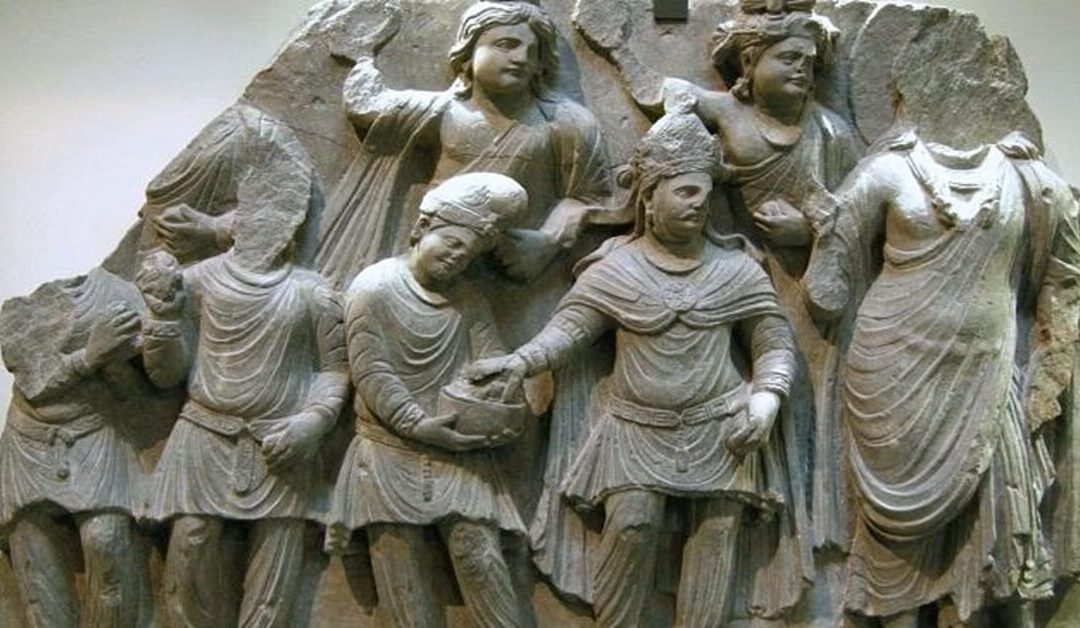
Art wealth was created by the Kushans who patronized the arts more. Elegance, artistry, Kusuri’s carving saw the emergence of splendor in art. The development of the Kushan period ushered in a new era in Indian art. It is called ‘Gandhara Art’ because the Kushans developed art with Gandhara as their center. This art is also named ‘Greco-Buddhist Art’ as it has features of Greek and Indian art. Also called ‘Greco-Roman art’ as it combines features of the Hellenistic art of Asia Minor and the Roman Empire.

1. Gandhara Art Style:

Present day Afghanistan was formerly known as Gandhara country. The Greek sculptors who came here gave birth to a new art style. It is called ‘Gandhara style of sculpture’. Its major art centers are:

Jalalabad,

the boat

Bamiyan,

Swat Valley and Peshawar District.

Gandhara sculpture is the result of India’s cultural and commercial contact with the kingdoms of Greece and Rome. As the Mahayana sect grew, Gandhara sculpture was introduced to China, Tibet and Japan, but further Gandhara art lost its importance and disappeared after the Kushans. In sculpture, reliefs are given priority. The Mahayana sect elevated Buddha to the level of divinity, which inspired the carving of idols. Stone, plaster and clay were used in the creation of idols. In this art, various forms of Buddha were created. The birth of the Buddha, as a prince, as a monk, and how Siddhartha became the Buddha are depicted. Details are available from the childhood of the Buddha to the time of his enlightenment. VA Smith opines that ‘the sculptor seems to have used all the elements appropriately without neglecting any mundane taste’.

Salient features of Gandhara sculptural style
1. Effigy idols:

Buddha idols were not carved before the Kushans. And did not worship. Instead they worshiped only symbols of Buddha. They are:-

1. Buddha’s Foot Mark,

2. Umbrella,

3. Vacancy,

4. Remains of Buddha’s ossuary,

But at first he started carving Buddha idols in Gandhara style. These were in standing, seated or reclining statuettes of mannequins.

2. Likeness of Greek God:

Greek sculptors did not forget their earlier Greek technique, method and form even when carving Indian Buddha. Instead, he saw it in the statue of Buddha. As a result Gandhara Buddha images resembled the Greek god ‘Apollo’.

3. Hairstyle and long beard and mustache:

Greco-Roman theological motifs are intermingled in the carved Buddha from Greek sculptures. Mainly attention is given to hairstyle. Hair goes up like stairs. The head is decorated with jewels. A long moustache, beard carved in accordance with the Greek tradition. Yakshas, ​​Garudas, Nagas, sages and priests, including the Indian Buddha, are left with beards and mustaches. These sculptures look like the Greek Atlantis, Bacchants, Nues, Heraxis, Eros, Hermes.

4. Prominent muscle:

At first the Greek sculptors listened to the biography of Siddhartha. He imagined a king who was supposed to be in a blissful slumber, leaving his kingdom, palace, wife and children and drifting away. He imagined in his mind what it would be like to be a person without food, always inquisitive, thinking about removing the world’s misery. The story of Siddhartha, the Buddha, was planted in his mind as such an enlightened person. Thus the Greek sculptors began to carve realistically. The result was a stone Buddha with a sunken forehead, sunken eyes and protruding muscles.

5. Pleated Garment Transparent Garment for Buddha:

Greek sculptors showed their talent in depicting the garb worn by Buddha. The Buddha’s garment is pleated and is at the base of the fold. The body structure is visible from the top of the clothes and is transparent. The dress is modeled after the Greek toga.

6. Indianness in subject matter and yoga pose:

The Greeks settled in what is now Afghanistan (Gandhara) chose the Indian Lord Buddha as the subject matter for their sculptures. Indian sages, garudas and yakshas also appeared in his carvings. Lord Buddha’s sitting posture was a model of yoga, the sculptor was a Greek sculptor of foreign background whose subject matter was Indian and the subject matter was significant. So Dr. According to RC Majumdar, ‘The Gandhara sculptor had a Greek hand and only an Indian heart’.

As recently as 2001, the fanatical Taliban government of Afghanistan destroyed the precious Gandhara idols. The idol was vandalized using cannons, tanks and medicine bullets and was destroyed. It has destroyed a precious culture of its country. Chief among these are:

1. Bamiyan rock-cut Buddha image. It was 175 feet tall and was the tallest in the world. Hiuen Tsang claims to have hunted here and seen this idol.

2. Another famous idol destroyed by the Taliban is Sadri Bahlool Buddha. It was 86 feet tall. 3. The Taliban government systematically dismembered thousands of idols in the National Museum in Kabul.

3. Despite the appeal of the whole world, the Taliban government did not listen and continued its work of idolatry. In the history of culture and civilization they advertised to the world that they had no culture and civilization. This is the story of the Taliban’s ritualistic idol destruction.

2. Mathura style of art

Mathura art style is known as the art developed with Mathura as its center. Mathura sculptures include Jain Tirthankaras, Buddha, Bodhisattvas and Sundaryas, Lavanyavatis, Brahma, Vishnu, Shiva, Surya, Mahishasura Mardini etc. Some of the sculptures of young women are very graceful. The scene of the young woman singing with the birds, the bird trying to suck the water while a young woman is taking a bath and squeezing her hair, the Amohini sculpture, the sculpture of Kanishka are the best sculptures. Rawlinn has described it as ‘Deshy Art Style’ due to the presence of Indian elements in the Mathura art style. Prof. Romila Thapar opined that the credit for Indianizing the Buddha image goes to the Mathura Kala Panth.

3. Sarnath Kalapantha

The Sarnath style of art contained desi elements similar to the Mathura style. It was freed from foreign influence. “Bikshubala” carved the Bodhisattva idol at Sarnath during the reign of Kanishka.

Architecture

During the Kushana period, architecture, like sculpture, was highly developed. Kanishka patronized a Greek architect named “Agesilon”. A large number of buildings were constructed in areas like Peshawar, Kanishkapur, Takshashile, Mathura etc. Such include stupas, viharas and sangharams. Such precious monuments are in dilapidated condition. Kanishka built many towers. He built a city called Kanishkapura in Kashmir. He laid the foundation stone of Sirsur city of Taxila. As Kanishka developed Purushura (Peshawar), ‘Huvishka’ beautified Mathura with monuments and sculptures. Huvishka built a city called Huvishkapura in Kashmir.

Ashoka Dhamma

Ashoka Dhamma

The Prakrit form of the word dharma is `dhamma’. Dhamma means religion, law of piety, morality, social and religious system. The basic tenets of Ashoka Dhamma can be found in the inscriptions carved by Ashoka himself. Namely

Mastery of Senses

Gratitude

Kindness

Purity

Service

Reverence – Deep Respect

Purity of Thought

Devotion

Charity

Truthfulness

Support

Reverence – Deep Respect

There is a difference of opinion among scholars as to which religion Ashoka Dhamma, which includes the above elements, is based on or influenced by.

Dr. According to Bhandarkar Ashoka Dhamma is Buddhism. He is a Buddhist. But Dr. who opposes it. Radha Kumud Mukherjee says that if Ashoka’s epitaphs were Dhamma Buddhism, he would at least refer to the Four Noble Truths, the Eightfold Path and Nirvana. He was celebrating the great personality of Lord Buddha. But Mukherjee’s clear opinion is that Ashoka Dhamma, which does not do that, is not Buddhism.

Kallan in his work ‘Rajatarangini’ mentions that Ashoka was a worshiper of Shiva. Also in the epitaphs he called himself ‘Devanampri Priyadarshi’. K.M. Panikkar questions whether this god is other than the Vedic God. That means Ashoka was a Vedic. It means that his religion was based on ‘Vedic Dharma’ (Hinduism). But other scholars who oppose it say that if the dhamma advocated by Ashoka was the Vedic religion, he would have affirmed his belief in its symbolic animal sacrifice, yaga, tradition and rituals. But it is clear from them that Ashoka of Chakaravetta was not influenced by Vedic religion.

In fact it can be seen that Ashoka Dhamma was not influenced by any religion. But it is the essence of all religions. It is a free expression that does not come under the framework of any caste, creed or religion. Dr. R.C. According to Majumdar, “It is free to call his religion a code of conduct rather than a religion”. According to RK Mukherjee, “Ashoka’s religion was not a specific system but it was a code of conduct necessary for all castes, races and religions. His originality lies in his actions.” Smith says that Ashoka’s religion was not Buddhism but his own.

Prof. Romila Thapar opined. Ashoka’s Dhamma consisted of 4 main principles. They are

1. non-violence,

2. tolerance,

3. peace,

4. public welfare.

Ashoka’s dhamma considered rituals to be followed at times of illness, weddings, births and before traveling as corrupt and useless rituals. According to Dr. RK Mukherjee “Ashoka’s dhamma was not a specific dharma and religious system but moral laws which were necessary for all castes and races”. Dr|| Bhandarkar says “Ashoka’s Dhamma was a non-religious Buddhism”.

Characteristics of Ashoka Dhamma:
1. Nonviolence:

Nonviolence was the essence of Ashoka Dhamma. He practiced non-violence after the Kalinga War, banned animal sacrifice in his kingdom and stopped hunting himself. He gave up meat. He prohibited sacrifices. He made a royal order not to kill animals. He preached the importance of non-violence in his epitaph.

2. Tolerance:

Tolerance means sympathy with slaves and employees, giving respect to elders, Guruvaryas as well as giving farewell. He also says to show generosity to the younger ones, lovers, dependents, the poor, the needy, friends, acquaintances, monks, Brahmins. Although Ashoka’s personal religion was Buddhism, he did not look down on other faiths. He saw the Brahmins with love and trust.

In the second epitaph, Ashoka himself wrote that the king respected all sects. He also built caves near Gaia for non-living beings. Ashoka did not force anyone to convert. This is the boast of Ashoka and the Dhamma. According to Ashoka’s Dhamma, one’s own sect becomes stronger when he respects the parasantha over his own sect. Every sect deserves reverence for its own reason.

3. Peace:

Peace is the mantra of success. Unrest becomes chaos.

4. World brotherhood:

Ashoka upheld world brotherhood. He declared that all the people of the world are his brothers. This is what Ashoka made the most important feature of Dhamma. In this respect Ashoka can be called ‘the world’s first internationalist’.

5. Praja Kalyana:

Another important feature of Ashoka Dhamma is Praja Kalyana or the establishment of a happy state. Striving for the moral, worldly and spiritual upliftment of all his subjects, Ashoka devoted his life to their happiness. Similarly in his first Kalinga inscription all the subjects are his children. They should be happy not only in this world but also in the hereafter.” In the 6th epitaph, she said, “All citizens are my children. No matter where I am—whether dining, in the temple, the cowshed, my bedroom, or the palace—my door is always open. You can come to me at any time to seek guidance and overcome your problems. I am always ready to help.”

Factors that Led to the Rise of New Religions:

Factors that Led to the Rise of New Religions:

Introduction:

The 6th century BC is recognized as a “turning point” in human history. This century saw great changes in the political and religious spheres. The 6th century BC is a notable period in history.

The reason for this is:

1. The kingdom of Magadha prospered.

2. 16 Great Janapadas grew up on the political stage.

3. Foreign invasions of India.

4. In the 6th century BC, the influence of the Persians in the political and cultural spheres became stronger in North-West India.

5. Jainism and Buddhism flourished among the world’s major religions.

6. Cultural contact between India and Greco-Persian nations.

Emergence of New Religions: A Response to the Evolving Needs of Society:

Throughout history, the emergence of new religions has reflected the changing dynamics in societies. In ancient India, the decline of Vedic religion and the rise of new belief systems such as Jainism and Buddhism were attributed to various interrelated factors. By examining these factors, we can gain insight into why people sought alternatives to traditional beliefs and practices.

1. Predominance of Yaga Yagnas:

Towards the end of the Vedic age the Yagayagnas became more dominant. These austere sacrifices in Vedic religion were too much of a financial burden for the masses. The priests became powerful. The common people were determined to show their support to the new sect if it flourished instead of the Vedic sect of costly sacrifices.

2. Economic barriers to people's participation:

As the Vedic rites of passage expanded, they limited their access to the elite. For common people, these are forbidden. The cost associated with yajnacharas (sacrificial rituals) skyrocketed, making it impossible for common people to participate. This economic isolation created discontent, as the majority were excluded from communal and inclusive spiritual practices.

3. Role of Priests:

Vedic priests played an important role in perpetuating the complexity of rituals. He often imposed unnecessary rituals on the society. He enjoyed a life of luxury with devotion to the masses, which aroused resentment among the oppressed. The disconnect between the lavish lives of the priests and the struggles of the common people prompted a search for new spiritual paths that promised a more egalitarian approach to worship.

4. Rise of Superstitions:

Over time, superstitions began to take root within the Vedic religion, further distorting its original teachings. Instead of providing enlightenment and guidance, the religion plunged its followers into greater darkness. This growing confusion and disillusionment pushed people to seek clarity and meaning in new belief systems.

5. Complexity of Caste System:

Caste system was very complex in Vedic society. Brahmins held the highest position in the society, performing the duties of Vedanta and priesthood. Exempt from taxation, Kshatriyas had no such privileges. Thus new religions were founded by the disaffected Kshatriya classes.

6. Ethical concern over sacrifices:

The increasing emphasis on animal sacrifice in Vedic rituals posed an ethical dilemma for many practitioners, especially those committed to the principles of non-violence. This moral conflict made the followers of Ahimsa feel conflicted and ready to accept alternative religions in accordance with their values. Jainism and Buddhism, with their emphasis on compassion, offered a welcome refuge to those troubled by the violent aspects of Vedic rituals.

7. Animal Sacrifice:

Sacrificing innocent animals was a tradition in Vedic religion. Thus people were attracted towards the religion that preached non-violence. Thus there were many complementary factors for the rise of newism.

8. Use of common language:

Sanskrit language was used for preaching in Vedic sect. Sanskrit language was not the language of common people but was a tough language. Brahmin scholars had to be relied upon to interpret religious works. Around this time, the language of the common people was used, and its influence led to the rise of new religions.

9. Idea of Moksha Marga:

It became a difficult problem for the common people as to which path should be followed if a person wants to attain Moksha. Different paths arose called penance, knowledge path and karma path. It became ambiguous as to which of these various paths to depend upon would lead to liberation. The masses supported the establishment of new sects as the new religions contained simple and easy principles.

10. Upanishads:

The Upanishads inspired the rise of new sects. The Upanishads condemned the religious aspects of the Vedic sect and defined the path of knowledge as the best path to salvation.

11. Rise of New Sects:

New sects like Charvaka, Nastika, Parivrajaka arose in opposition to Vedic religion. This development also led to the rise of new religions.

Conclusion

The rise of new religions such as Jainism and Buddhism in ancient India can be understood as a natural response to the evolving needs of society. Disillusionment with the complexities and particularities of Vedic religion combined with a desire for egalitarianism, ethical practices, and accessible teachings gave way to these alternative spiritual paths. In search of clarity and inclusiveness, the masses turned to these new religions, which resonated with their aspirations for a more meaningful and equitable spiritual experience.

ಪೂರ್ವವೈದಿಕ ಕಾಲ

ಪೂರ್ವವೈದಿಕ ಕಾಲ

ಪೂರ್ವವೈದಿಕ ಕಾಲವನ್ನು ಋಗ್ವೇದದ ಕಾಲವೆಂತಲೂ ಹೆಸರಿಸಲಾಗಿದೆ. ಋಗ್ವೇದದ ಕಾಲಮಾನದ ಬಗ್ಗೆ ತೀವ್ರ ಭಿನ್ನಾಭಿಪ್ರಾಯಗಳಿವೆ. ವಿಭಿನ್ನ ಕಾಲಮಾನಗಳ ಬಗ್ಗೆ ಅವಲೋಕಿಸಿದ ಆರ್.ಸಿ.ಮಜುಂದಾ‌ರ್ ರವರು ಕ್ರಿ.ಪೂ 2000-1500 ಋಗ್ವೇದದ ಕಾಲವೆಂದು ಅಭಿಪ್ರಾಯಪಟ್ಟಿದ್ದಾರೆ.  ಋಗ್ವೇದದ ಕಾಲದ ಆರ್ಯರ ಜನಜೀವನವನ್ನು ಈ ಕೆಳಕಂಡ ಅಂಶಗಳಲ್ಲಿ ಅವಲೋಕಿಸಬಹುದು.

ಎ) ರಾಜಕೀಯ ವ್ಯವಸ್ಥೆ:
ಬಣ ರಾಜ್ಯಗಳು:

ಪೂರ್ವವೈದಿಕ ಕಾಲದ ಆರಂಭದಲ್ಲಿ ಬಣರಾಜ್ಯಗಳು ಸ್ಥಾಪನೆಯಾದವು. ಒಂದೊಂದು ಬಣಕ್ಕೆ ಒಂದೊಂದು ರಾಜ್ಯವಿತ್ತು. ಭರತ, ಕುರು, ಯದು ಮೊದಲಾದ ಬಣಗಳ ಹೆಸರುಗಳಿವೆ. ಬಣ ರಾಜ್ಯಗಳ ಮಧ್ಯೆ ಅಧಿಕಾರ ಸ್ಥಾಪನೆಗಾಗಿ ಹೋರಾಟಗಳು ನಡೆಯುತ್ತಿದ್ದವು. ಹಲವಾರು ಗ್ರಾಮಗಳನ್ನೊಳಗೊಂಡ ಘಟಕವನ್ನು ವಿಷಯ ವೆಂದು ವಿಷಯದ ಅಧಿಪತಿಯನ್ನು ವಿಷಯಪತಿ ಎಂದು ಕರೆಯಲಾಗುತ್ತಿತ್ತು. ಕ್ರಮೇಣ ಸಣ್ಣರಾಜ್ಯಗಳು ಏಳಿಗೆಗೆ ಬಂದವು. ರಾಜ್ಯಗಳನ್ನು ರಾಷ್ಟ್ರಎಂದು ಸಂಭೋದಿಸಿ, ಅದರ ಮುಖ್ಯಸ್ಥನನ್ನು ರಾಜನ್ ಎಂದು ಕರೆಯಲಾಗುತಿತು.

ರಾಜನ ಆಯ್ಕೆ:

ರಾಜನ ಆಯ್ಕೆಯು ಸಾಮಾನ್ಯವಾಗಿ ವಂಶಪಾರಂಪರ್ಯವಾಗಿತ್ತು. ಆದರೆ ಕೆಲವೊಮ್ಮೆ ರಾಜನನ್ನು ಚುನಾಯಿಸಲಾಗುತ್ತಿತ್ತು. ರಾಜನಿಗೆ ಅಪರಿಮಿತ ಅಧಿಕಾರಗಳಿದ್ದವು. ʻಐತ್ತರೇಯ’ ಬ್ರಾಹ್ಮಣದಲ್ಲಿ ರಾಜತ್ವದ ಉಗಮದ ಬಗ್ಗೆ ಉಲ್ಲೇಖವಿದ್ದು ʻಮನುಷ್ಯನ ದಿನನಿತ್ಯದ ಅವಶ್ಯಕತೆ ಮತ್ತು ಸೈನಿಕ ರಕ್ಷಣಾ ಅವಶ್ಯಕತೆಗಳಿಗಾಗಿ ರಾಜತ್ವ ಉದಯವಾಯಿತು ಎಂದಿದೆ’.

ಮಂತ್ರಿಗಳು ಮತ್ತು ಪ್ರಮುಖ ಅಧಿಕಾರಿಗಳು:

ರಾಜನಿಗೆ ಆಡಳಿತದಲ್ಲಿ ಸಹಕರಿಸಲು ಮಂತ್ರಿಪರಿಷತ್ ಇತ್ತು. ಇದರಲ್ಲಿರುವ ಮಂತ್ರಿಗಳು ಯೋಗ್ಯ ಮತ್ತು ಅನುಭವವುಳ್ಳ, ಶುದ್ಧ ಹಾಗೂ ಮೇಲ್ಮಟ್ಟದ ಚಾರಿತ್ರ್ಯ ಹೊಂದಿದವರಾಗಿದ್ದರು. ಬಂಡಿ ಚಲಿಸಲು ಚಕ್ರಗಳ ಅಗತ್ಯತೆ ಇರುವಂತೆ ಮಂತ್ರಿಗಳು ರಾಜನಿಗೆ ಅಗತ್ಯವಾಗಿ ಬೇಕಿತ್ತು. ಅಲ್ಲದೆ ಪುರೋಹಿತ, ಗ್ರಾಮಿಕ ಮತ್ತು ಸೇನಾನಿ ಎಂಬ ಆಡಳಿತಾಧಿಕಾರಿಗಳಿದ್ದರು.

ಪುರೋಹಿತನು ರಾಜ್ಯದ ಶ್ರೇಯಸ್ಸಿಗಾಗಿ ಪೌರೋಹಿತ್ಯದ ಕಾರ್ಯ ನಿರ್ವಹಿಸುತ್ತಿದ್ದನು. ಸೇನಾನಿಯು ರಾಜ್ಯದ ರಕ್ಷಣಾಕಾರ್ಯ ಮಾಡುತ್ತಿದ್ದನು. ಗ್ರಾಮಿಣಿಯು ಗ್ರಾಮೀಣ ಆಡಳಿತವನ್ನು ನೋಡಿಕೊಳ್ಳುತ್ತಿದ್ದನು.

ಸಭಾ ಮತ್ತು ಸಮಿತಿ:

ವೈದಿಕ ರಾಜ್ಯದ ವ್ಯವಹಾರಗಳಲ್ಲಿ ಪ್ರಸಿದ್ದ ಸಭೆಗಳಾದ ಸಭಾ ಮತ್ತು ಸಮಿತಿಗಳು ಭಾಗವಹಿಸುತ್ತಿದ್ದವು. ಸಭಾ ಮತ್ತು ಸಮಿತಿಗಳು ರಾಜನಿಗೆ ಸಲಹೆ, ಸೂಚನೆ ನೀಡುತ್ತಿದ್ದವು. ಎ.ಎಲ್.ಬಾಷ್ಯಂ ರವರು ತಮ್ಮ ಕೃತಿಯಾದ ‘ಎ ವಂಡರ್ ದಟ್ ವಾಸ್ ಇಂಡಿಯಾ’ ಎಂಬುದರಲ್ಲಿ ಸಭಾ ಮತ್ತು ಸಮಿತಿಗಳ ಪ್ರಾಮುಖ್ಯತೆಯನ್ನು ವಿವರಿಸಿದ್ದಾರೆ. ಸಭಾ ಮತ್ತು ಸಮಿತಿಗಳನ್ನು ʻಸಭಾಪತಿ’ ಎಂಬುವನು ಅಧ್ಯಕ್ಷತೆವಹಿಸುತ್ತಿದ್ದನು. ಸಭಾ ಮತ್ತು ಸಮಿತಿಗಳ ನಿರ್ದಿಷ್ಟ ಕಾರ್ಯನಿರ್ವಹಣೆಯ ಬಗ್ಗೆ ವಿವರಿಸುವುದು ಕಷ್ಟಸಾದ್ಯ.

ಬಿ) ಸಾಮಾಜಿಕ ಜೀವನ:

ಪೂರ್ವವೈದಿಕ ಕಾಲದ ಸಾಮಾಜಿಕ ವ್ಯವಸ್ಥೆಯಲ್ಲಿ ಹಲವಾರು ಪ್ರಮುಖ ಲಕ್ಷಣಗಳು ಕಂಡುಬರುತ್ತವೆ.

ವಿಭಕ್ತ ಕುಟುಂಬ (Nuclear family ):

ಋಗ್ವೇದದ ಪ್ರಾರಂಭದಲ್ಲಿ ʻವಿಭಕ್ತ ಕುಟುಂಬ’ವಿತ್ತು. ಇಲ್ಲಿ ತಂದೆ-ತಾಯಿ ಮತ್ತು ಮಕ್ಕಳು ಒಂದೇ ಮನೆಯಲ್ಲಿ ವಾಸಿಸುತ್ತಿದ್ದರು. ಋಗ್ವೇದದ ಅಂತ್ಯದ ಕಾಲದಲ್ಲಿ ಆಸ್ತಿಯ ಕಲ್ಪನೆ ಬೆಳೆದಂತೆ ಅವಿಭಕ್ತಕುಟುಂಬ ವ್ಯವಸ್ಥೆ ಬೆಳೆದು ಬಂದಿದ್ದು ಕಂಡುಬರುತ್ತದೆ.

ಪಿತೃ ಪ್ರಧಾನ ಕುಟುಂಬ:

ಸಾಮಾಜಿಕ ವ್ಯವಸ್ಥೆಯ ಮತ್ತೊಂದು ಪ್ರಮುಖ ಲಕ್ಷಣ ಪಿತೃಪ್ರಧಾನ ಕುಟುಂಬದ ರಚನೆ. ತಂದೆಯ ಮರಣಾನಂತರ ಹಿರಿಯ ಮಗ ಅಧಿಕಾರಕ್ಕೆ ಬರುತ್ತಿದ್ದನು.

ಸ್ತ್ರೀಯರ ಸ್ಥಾನ:

ಪುರುಷನಂತೆ ಸ್ತ್ರೀಗೂ ಸಮಾಜದಲ್ಲಿ ಪ್ರಮುಖ ಸ್ಥಾನವಿತ್ತು. ಸ್ತ್ರೀಯು ಪುರುಷನಂತೆ ವೇದಾಧ್ಯಯನ ಮಾಡಲು ಅವಕಾಶವಿತ್ತು. ಲೋಪಮುದ್ರ, ವಿಶ್ವಾವರ, ಅಪಾಲ ಮೊದಲಾದ ಸ್ತ್ರೀಯರು ವಿದ್ವಾಂಸರಾಗಿದ್ದರು.

ಜಾತಿಪದ್ಧತಿ:

ಜಾತಿಪದ್ಧತಿಯು ಅಸ್ತಿತ್ವದಲ್ಲಿತ್ತೇ ಅಥವಾ ಇಲ್ಲವೆ ಎಂಬುದರ ಬಗ್ಗೆ ಖಚಿತವಾಗಿ ಹೇಳುವುದು ಕಷ್ಟ. ಈ ಕಾಲದಲ್ಲಿ ಕ್ಷತ್ರ ಮತ್ತು ವಿಶ ಎಂಬ ಎರಡು ಜಾತಿಗಳಿರಬೇಕೆಂದು ಅಭಿಪ್ರಾಯ.

ಉಡುಪು ಮತ್ತು ಆಭರಣಗಳು:

ಹತ್ತಿ ಮತ್ತು ಉಣ್ಣೆಯ ಬಟ್ಟೆಗಳನ್ನು ಧರಿಸುತ್ತಿದ್ದರು.  -ಪುರುಷರ ಉಡುಪುಗಳು ಮೇಲುಹೊದಿಕೆ ಮತ್ತು ಕೆಳಹೊದಿಕೆ ಎಂದು ವಿಂಗಡಿಸಲಾಗಿತ್ತು. ಸ್ತ್ರೀ-ಪುರುಷರು ಆಭರಣಪ್ರಿಯರಾಗಿದ್ದರು. ಚಿನ್ನ ಮತ್ತು ಬೆಳ್ಳಿಯಿಂದ ತಯಾರಿಸಿದ ವಿವಿಧ ಆಭರಣಗಳನ್ನು ಹಾಕಿಕೊಳ್ಳುತ್ತಿದ್ದರು.

ವಿವಾಹ ಪದ್ಧತಿ:

ಏಕಪತ್ನಿತ್ವ ಮತ್ತು ಬಹುಪತ್ನಿತ್ವ ಪದ್ಧತಿಗಳೆರಡು ಅಸ್ತಿತ್ವದಲ್ಲಿದ್ದವು. ರಾಜರು ಬಹುಪತ್ನಿ ವ್ರತಸ್ಥರಾಗಿದ್ದರು. ವರದಕ್ಷಿಣೆ ಸಾಮಾನ್ಯ ಸಂಗತಿಯಾಗಿದ್ದು ಕೆಲವೊಮ್ಮೆ ವಧುದಕ್ಷಿಣೆ ಪದ್ಧತಿಯು ಕಂಡುಬರುತ್ತಿತ್ತು. ವಿವಾಹದ ಪ್ರಮುಖ ಉದ್ದೇಶಗಳಲ್ಲಿ ಪುರುಷ ಸಂತಾನ ಪಡೆಯುವುದು ಪ್ರಮುಖವಾಗಿತ್ತು.

ಆಹಾರ ಪಾನೀಯಗಳು:

ಮಿಶ್ರ ಆಹಾರ ಪದ್ಧತಿ ಕಂಡುಬರುತಿತ್ತು. ಗೋದಿ, ಬಾರಿ, ಬೆಣ್ಣೆ, ತುಪ್ಪ, ಸಸ್ಯಹಾರಗಳಾದರೆ ಕುರಿ, ಮೇಕೆ, ಕೋಳಿ ಮೊದಲಾದ ಪ್ರಾಣಿಗಳನ್ನು ಮಾಂಸಹಾರಕ್ಕಾಗಿ ಬಳಸುತ್ತಿದ್ದರು. ಸೋಮರಸ ಮತ್ತು ಸುರೆ ಎಂಬ ಮತ್ತಿನ ಪಾನೀಯಗಳನ್ನು ಸೇವಿಸುತ್ತಿದ್ದರು.

ಮನರಂಜನೆ:

ಮನರಂಜನೆಗಾಗಿ ಒಳಾಂಗಣ ಮತ್ತು ಹೊರಾಂಗಣದ ಆಟಗಳನ್ನು ಆಡುತ್ತಿದ್ದರು. ಚದುರಂಗ, ಚೌಕಾಬಾರ ಒಳಾಂಗಣದ ಆಟಗಳಾಗಿದ್ದರೆ, ಬೇಟೆಯಾಡುವುದು ರಥದ ಜೂಜು, ಕುದುರೆಯ ಜೂಜು ಮೊದಲಾದವು ಹೊರಾಂಗಣದ ಆಟಗಳಾಗಿದ್ದವು.

ಸಿ) ಆರ್ಥಿಕ ಜೀವನ:

ಋಗ್ವೇದ ಕಾಲದ ಆರ್ಯನ್ನರ ಆರ್ಥಿಕ ವ್ಯವಸ್ಥೆಯು ಕೆಲವು ಪ್ರಮುಖ ಕಸುಬುಗಳನ್ನು ಹಲವಾರು ಉಪಕಸುಬುಗಳನ್ನು ಆಧರಿಸಿತ್ತು. ಪ್ರಮುಖ ಕಸುಬುಗಳು: ವ್ಯವಸಾಯ, ವ್ಯಾಪಾರ, ಪಶುಪಾಲನೆ ಪ್ರಧಾನ ಕಸುಬುಗಳಾಗಿದ್ದವು.

ವ್ಯವಸಾಯ:

ಇದು ಋಗ್ವೇದ ಕಾಲದ ಪ್ರಧಾನ ಕಸುಬುಗಳಲ್ಲೊಂದು. ಕಾಡನ್ನು ಕಡಿದು ವ್ಯವಸಾಯ ಯೋಗ್ಯ ಭೂಮಿಯನ್ನು ನಿರ್ಮಿಸಿಕೊಂಡಿದ್ದರು. ಭೂಮಿಯ ಉಳುಮೆಗೆ ನೇಗಿಲನ್ನು ಬಳಸುತ್ತಿದ್ದರು ಹೋರಿಗಳು ಬಳಕೆ ಯಲ್ಲಿದ್ದವು. ಬಾರ್ಲಿಯು ಪ್ರಧಾನ ಬೆಳೆಯಾಗಿತ್ತು. ಇದನ್ನು ʻಯವ’ ಎಂದು ಹೆಸರಿಸಲಾಗಿದೆ.

ಪಶುಪಾಲನೆ:

ಈ ಕಾಲದ ಮತ್ತೊಂದು ಪ್ರಧಾನ ಕಸುಬು ʻಹಸುವು’ ಪವಿತ್ರವಾದುದಾಗಿತ್ತು. ಹಸುವನ್ನು ʻಅಘ್ನʼ ಎಂದು ಕರೆಯುತ್ತಿದ್ದರು. ಗೋಮಾಂಸ ಸೇವನೆ ನಿಷೇದಿಸಲ್ಪಟ್ಟಿತ್ತು. ಗೋವನ್ನು ಕೊಂದರೆ ಕೊಂದ ವ್ಯಕ್ತಿಯನ್ನು ಮರಣದಂಡನೆಗೆ ಗುರಿಪಡಿಸುತ್ತಿದ್ದರು, ಕುದುರೆ ಬಳಕೆ ಹೆಚ್ಚಾಗಿದ್ದು ಕತ್ತೆ, ಕುರಿ, ಮೇಕೆಗಳನ್ನು ಸಹ ಸಾಕುತ್ತಿದ್ದರು.

ವ್ಯಾಪಾರ:

ಆಂತರಿಕ ಮತ್ತು ಅಂತರಾಷ್ಟ್ರೀಯ ವ್ಯಾಪಾರ ಅಸ್ತಿತ್ವದಲ್ಲಿತ್ತು. ವ್ಯಾಪಾರದಲ್ಲಿ ವಸ್ತು ವಿನಿಮಯ ಪದ್ಧತಿ ಅಸ್ತಿತ್ವದಲ್ಲಿದ್ದು ಹಸುವನ್ನು ವಿನಿಮಯಕ್ಕಾಗಿ ಬಳಸುತ್ತಿದ್ದರು. ಎತ್ತಿನ ಗಾಡಿ, ರಥ ಮತ್ತು ದೋಣಿಗಳನ್ನು ವಸ್ತುಗಳ ಸಾಗಾಣಿಕೆಗೆ ಬಳಸುತ್ತಿದ್ದರು. ಭೂಸಾರಿಗೆ ಮತ್ತು ಜಲಸಾರಿಗೆಗಳೆರಡು ಅಭಿವೃದ್ಧಿಹೊಂದಿದ್ದವು.

ಉಪಕಸುಬುಗಳು:

ವೈದಿಕಸಂಸ್ಕೃತಿಯ ಜನರು ಜೀವನ ನಿರ್ವಹಣೆಗಾಗಿ ಹಲವಾರು ಉಪಕಸುಬುಗಳನ್ನು ಅವಲಂಬಿಸಿದ್ದರು. ನೂಲುವುದು, ನೇಯ್ಗೇ, ಆಭರಣಗಳ ತಯಾರಿಕೆ, ಕರಕುಶಲ ಕಲೆ ಮೊದಲಾದವು ಉಪಕಸುಬುಗಳಾಗಿದ್ದವು.

ಡಿ) ಧಾರ್ಮಿಕ ಜೀವನ:

ಪೂರ್ವ ವೈದಿಕಕಾಲದ ಆರ್ಯರಧಾರ್ಮಿಕ ಜೀವನವು ಹಲವು ಪ್ರಮುಖ ಅಂಶಗಳನ್ನು ಒಳಗೊಂಡಿತ್ತು.

ಪ್ರಕೃತಿಯ ಆರಾಧನೆ:

ಆರ್ಯರ ಪ್ರಾರಂಭಿಕ ಧಾರ್ಮಿಕ ಜೀವನದಲ್ಲಿ ಪ್ರಕೃತಿಯ ಆರಾಧನೆಯು ಪ್ರಮುಖವಾಗಿ ಕಂಡುಬರುತ್ತದೆ. ಪ್ರಕೃತಿಯಲ್ಲಿ ಬರುವ 33 ದೇವಾನುದೇವತೆಗಳನ್ನು ಆರಾಧಿಸುತ್ತಿದ್ದರು. ಇಂತಹ ದೇವತೆಗಳನ್ನು ಮೂರು ವರ್ಗಗಳಾಗಿ ವಿಂಗಡಿಸಿದ್ದರು.

1.ಭೂದೇವತೆಗಳು

2. ಸ್ವರ್ಗದ ದೇವತೆಗಳು

3.ಆಂತರಿಕ್ಷ ದೇವತೆಗಳು 

ಆರಾಧನೆಯ ಪ್ರಮುಖ ದೇವಾನುದೇವತೆಗಳು:

ಇಂದ್ರ, ಅಗ್ನಿ, ವಾಯು, ಪೃಥ್ವಿ, ವರುಣ, ಉಷಸ್ ಇವುಗಳು ಪ್ರಧಾನವಾದ ದೇವಾನುದೇವತೆಗಳಾಗಿದ್ದರು.

ಯಾಗ ಯಜ್ಞಾದಿಗಳು:

ಪೂರ್ವ ವೈದಿಕಕಾಲದ ಧಾರ್ಮಿಕ ವ್ಯವಸ್ಥೆಯಲ್ಲಿನ ಬೆಳವಣಿಗೆಯ ಒಂದು ಪ್ರಮುಖ ಅಂಶವೆಂದರೆ ಯಾಗಯಜ್ಞಾದಿಗಳು ಹುಟ್ಟಿಕೊಂಡಿದ್ದು. ಪೂರ್ವವೈದಿಕಕಾಲದಲ್ಲಿ ಅಸ್ತಿತ್ವಕ್ಕೆ ಬಂದ ಪುರೋಹಿತರ ವಿಶೇಷ ಪೂಜೆಗಳು ಮತ್ತು ಅಂತಹ ಪೂಜಾ ಸಮಯದಲ್ಲಿ ಮಂತ್ರಗಳ ಪಠಣ ವ್ಯವಸ್ತೆಯೇ ಯಾಗಯಜ್ಞಗಳಾಗಿ ರೂಪುಗೊಂಡವು. ಯಾಗ ಯಜ್ಞಗಳನ್ನು ಆಚರಿಸುವುದರಿಂದ ಇಹ ಜೀವನದಲ್ಲಿ ನೆಮ್ಮದಿಯು, ಸದ್ಗತಿಯು, ಮೋಕ್ಷವು ದೊರೆಯುತ್ತದೆ ಎಂಬ ನಂಬಿಕೆ ಪ್ರಬಲವಾಯಿತು. ಇದರ ಹಿನ್ನೆಲೆಯಲ್ಲಿ ಯಾಗಯಜ್ಞಗಳು ಪ್ರಧಾನವಾಗಿ ಕಂಡುಬಂದವು. ಇಂತಹ ಯಾಗ ಯಜ್ಞಗಳು ಜನಸಾಮಾನ್ಯರಿಗೆ ಅಧಿಕ ಆರ್ಥಿಕ ಹೊರೆಯಾಗಿದ್ದರೂ ಅವುಗಳ ಆಚರಣೆ ಅನಿವಾರ್ಯವೆನಿಸಿತ್ತು. ಪೂರ್ವ ವೈದಿಕ ಕಾಲದಲ್ಲಿ ಏಳು ಮಂದಿ ಪುರೋಹಿತರು ಧಾರ್ಮಿಕ ವ್ಯವಸ್ಥೆಯಲ್ಲಿ ಪ್ರಧಾನಪಾತ್ರ ವಹಿಸುತ್ತಿದ್ದರು.

ಬಲಿಪದ್ಧತಿ:

ಯಾಗ ಯಜ್ಞಗಳ ಆಚರಣೆಯ ನಂತರ ಪ್ರಾಣಿಗಳನ್ನು ಇಷ್ಟದೇವತೆಗಳಿಗೆ ಬಲಿಯಾಗಿ ನೀಡುತ್ತಿದ್ದರು. ಗೋಹತ್ಯೆಯಿಂದಾಗಿ ಗೋಸಂಪತ್ತು ಕ್ಷೀಣಿಸಿತು. ಯಜ್ಞದ ಕಾಲದಲ್ಲಿ ಬಂದ ಅತಿಥಿಗಳನ್ನು ಗೊಗ್ನ ಎಂದು ಕರೆಯುತಿದ್ದರು. ‘ಗೊಗ್ನ’ ಎಂದರೆ ಗೋವನ್ನು ಸೇವಿಸುವವನು ಎಂದರ್ಥ. ಕ್ರಮೇಣ ಗೋಭಕ್ಷಣೆ ಮಹಾಪಾಪವೆಂದು ಅವುಗಳ ರಕ್ಷಣೆಗಾಗಿ ಧಾರ್ಮಿಕ ವಿಧಿಯನ್ನೇ ಮಾಡಿದರು.

ಋಗ್ವೇದ ಕಾಲದ ಸಾಹಿತ್ಯ:

ಋಗ್ವೇದ ಕಾಲದಲ್ಲಿ ‘ಋಗ್ವೇದ’ ಸಾಹಿತ್ಯ ಮಾತ್ರ ರಚನೆಯಾಯಿತು. ಇದರ ಬಗ್ಗೆ ಹೆಚ್ಚಿನ ಮಾಹಿತಿಯನ್ನು ಈ ಹಿಂದೆಯೇ ನೀಡಲಾಗಿದೆ. ‘ಆರ್ಯ ಸಂಸ್ಕೃತಿಯ ರಚನೆಗಿರುವ ಮೂಲಾಧಾರಗಳು’ ಎಂಬ ಭಾಗವನ್ನು ಗಮನಿಸಿ.

ವಿಜ್ಞಾನ:

ಋಗ್ವೇದ ಕಾಲದ ಜನರಿಗೆ ವೈದ್ಯಕೀಯ ಪದ್ಧತಿಯ ಪರಿಚಯವಿತ್ತು. ಅನೇಕ ರೋಗಗಳು ಮತ್ತು ಅವುಗಳಿಗೆ ಬಳಸುವ ಗಿಡಮೂಲಿಕೆ ಔಷಧಿಗಳು ಹಾಗೂ ರೋಗ ನಿವಾರಣಾ ಮಂತ್ರ-ತಂತ್ರಗಳ ಬಗ್ಗೆ ವಿವರಗಳು ದೊರೆತಿವೆ. ಕ್ಷಯ, ಕುಷ್ಟ, ಕಾಮಾಲೆ, ಆಮಶಂಕೆ, ಅರಳು ಮರಳು ಮೊದಲಾದ ಅನೇಕ ರೋಗಗಳ ಬಗ್ಗೆ ಋಗ್ವೇದದಲ್ಲಿ ವಿವರಗಳಿವೆ. ಔಷಧಿಯ ಜೊತೆಗೆ ಶಸ್ತ್ರ ಚಿಕಿತ್ಸಾ ವಿಧಾನವು ಬಳಕೆಯಲ್ಲಿತ್ತು. ಯುದ್ಧಗಳಲ್ಲಿ ಹೋರಾಡುವಾಗ ಕಾಲು ಕಳೆದುಕೊಂಡವರಿಗೆ ಶಸ್ತ್ರ ಚಿಕಿತ್ಸಾ ವಿಧಾನದ ಮೂಲಕ ಕಬ್ಬಿಣದ ಕಾಲುಗಳನ್ನು ಜೋಡಿಸುತ್ತಿದ್ದರು. ಗಾಯಗಳು ಮತ್ತು ಹಾವು ಕಡಿತವನ್ನು ವೈದ್ಯರು ಯಶಸ್ವಿಯಾಗಿ ವಾಸಿ ಮಾಡುತ್ತಿದ್ದರು. ಖಗೋಳ ವಿಜ್ಞಾನದ ಪರಿಚಯ ಸ್ವಲ್ಪಮಟ್ಟಿಗಿದ್ದಿತು. ನಕ್ಷತ್ರಗಳ ಚಲನೆಯನ್ನು ಗಮನಿಸಿ. ಪತ್ತೆಮಾಡಿದ್ದರು. ಋಗ್ವೇದ ಕಾಲದಲ್ಲಿಯೇ 30 ದಿನಗಳ 12 ತಿಂಗಳುಗಳನ್ನು ಒಂದು ವರ್ಷವೆಂದು ಪರಿಗಣಿಸಲಾಗಿತ್ತು.